7 min read
Refill the Top of a String of Hearts Basket
Layer a few living vines across the rim to build new roots and bring foliage back to the top of the pot.
On this page
Look down into a hanging string of hearts before deciding what to do with the vines below it. You might see a few wiry stems crossing a pot with several inches of bare surface. The same plant looks plentiful from eye level, where a curtain of leaves hangs down. Keep that lower growth if you enjoy it. You can fill a gap at the top by guiding a small part of a living vine back to the surface and letting it root there. This is layering, and it gives a thin basket time to rebuild without relying on every cut stem taking at once.
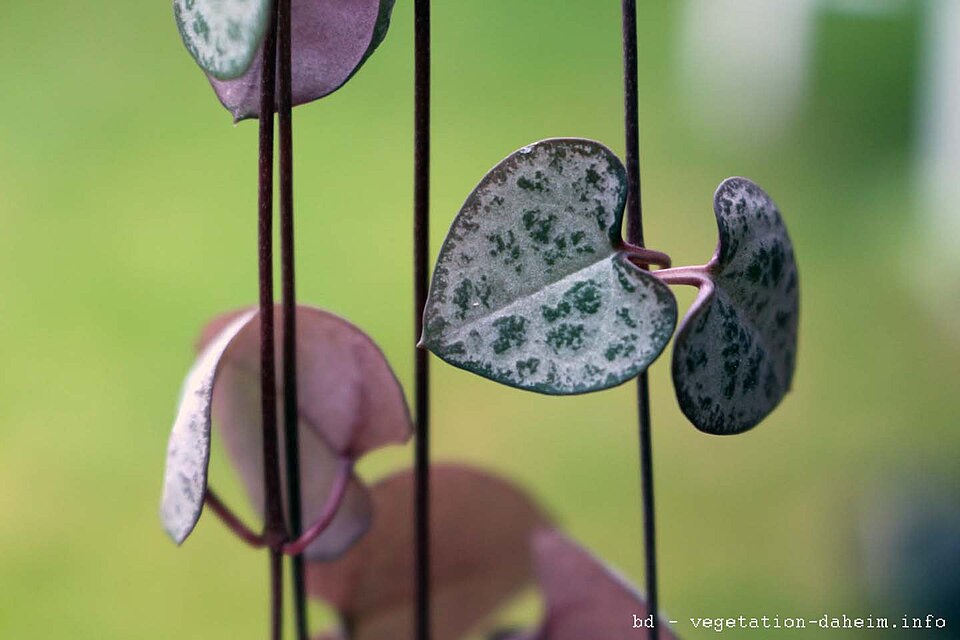
String of hearts, Ceropegia woodii, stores moisture in fleshy parts and likes bright indirect light and a freely draining mix. It may produce small beadlike tubers along the stems. Where a tuber touches suitable growing medium, it can produce roots and growth, which makes it a good choice when there is a bald spot beside a living vine. The first task is to see whether the plant needs more roots, more light or simply a better view of its youngest leaves. A basket hung high above a window sill can hide a lighting problem even in a sunny room.
Find the cause of the empty patch
Lift the pot off its hook and set it down in good light. Follow the stems from the center outward. Check whether the gap is between healthy separate shoots or whether it is the result of stems dying at the surface. If stems are soft, the mix smells sour or the pot remains heavy long after watering, address drainage and root condition first. Extra vines pinned to the same wet mix are unlikely to solve a problem at the roots. In a freely draining basket, a few older bare sections and several strong leafy tips can be an appropriate situation for layering.
Look at the distances between leaves on the longest vines. They are naturally spaced along thin stems. A steady increase in the gaps on fresh growth, especially where those vines hang below or away from the window, can suggest insufficient light. Look at the top of the basket separately. From above, it may have a dark shadow cast by a valance or the upper wall. Lowering the whole plant by a short distance can brighten the center and make it easier to water. Change exposure gradually if that move puts it in much stronger light.
Decide what success looks like in that room. Seen from the side, one new stem at the rim may be enough to give an empty corner a sense of continuity. Seen from above on a shelf, you may want several small centers of new growth. Put the pot at its normal height and check the view before moving more vines. There is no need to cover every bare part if you still want room to feel the mix and see where water is going.
Put a living node or tuber against the mix
Select a flexible, healthy section of vine near the pot. It should reach the proposed spot in a loose curve. If the nearest stem snaps or seems stiff when lifted, work with a younger flexible stretch. Move only enough for contact at a beadlike tuber or a suitable node, the point where leaves emerge. Keep leaves above the surface. The aim is for one small part of the stem to touch the mix while the tip and older plant remain connected and growing.
Hold the section in place with a small plant pin if it springs back up. Choose one wide enough to bridge the stem without pinching it, and set its ends in the mix away from the thickest crowd of roots. Add a little fresh, airy mix at the contact point if the surface has eroded, keeping the leaves and most of the vine clear. Firm only enough to make contact. A rock that presses on an entire shoot makes it difficult to inspect for damage later. A light pin or a curved stretch of vine held by its own position gives you a better view.
Use a separate small pot if the original surface is too full, too hard, or hard to reach. Set the second pot alongside the first at the same height and bridge one vine across. You can then see exactly where the piece made contact and manage its mix independently. This also suits a vine that would need an abrupt bend to come up over the original rim. When the new growth is established, you can keep the second pot on its own or decide whether to add the rooted piece to a fuller arrangement.
Water the pot you have, then watch the contact point
Use an open, quick-draining potting mix. String of hearts should have a chance to dry between waterings, and actively keeping the whole basket damp to encourage one layer can cause problems. Water the main pot when it needs it and drain it completely. A layer will make better contact after the mix settles if you check the pin and gently reset it as needed. Keep track of the pot weight and the feel of the medium. A fine pocket that stays wet around a tuber is a cue to look at drainage and airflow.
In a second pot, a small amount of mixture is easier to assess. Check it more often initially because it can dry faster than the larger basket. When you water, wet it thoroughly enough to reach the contact area and let the excess drain. For a pot perched beside a hanging basket, be sure neither can slide or pull the vine tight. If you use an attractive outer cover, lift the inner pot regularly to see whether water has collected underneath. That hidden water can make an otherwise reasonable routine difficult to read.
Avoid lifting the layer every few days to look for roots. A newly attached piece can tear away before it contributes anything. Watch for growth near the contact point and compare its progress with the rest of the vine. A gentle check after you see sustained growth is more useful than frequent pulling. If the section has never stayed in contact, adjust the position or try a clearly visible tuber. If several healthy pieces stall and the plant is quiet generally, wait for stronger active growth before starting another round.
If you have several candidate vines, leave one untouched as a comparison. Check where its newest leaves are forming while you watch the layer. When both sections have slowed through a dim period, give the plant time. When the untouched vine is growing and the pinned section is drying at the bend, the position of that bend deserves a closer look. Reset it with a gentler curve or choose a shorter reach.
Make cuts only when they serve the shape of the plant
A stem that rooted in the same basket can stay connected. Consider cutting only when the loop gets in the way of watering or you need to detach a rooted section for a second container. On a nursery layer, wait until there is evidence that the new roots can support growth. Check that the rooted piece is seated and has usable foliage before separating the connection with clean scissors. Handle the thin stems without tugging. Mark the date on the smaller pot so you can distinguish growth made after separation from the older leaves.
If the remaining loose ends are uneven, decide what you want people to see from eye level. Keep some longer vines and trim others only where they would catch against furniture or the hanger. Work with one strand at a time. A tangled set of vines can seem like one stem when you grasp it as a handful. Trace each back before cutting. It helps to set shallow trays or clean paper below the hanger so finished strands cannot fall across neighboring loops while you work.
Keep the top within reach
Put the pot back somewhere you can lift it and see its surface. A hook designed for the load and securely attached to the building matters more once the pot is watered and has filled out. A stand or shelf may be a better choice if you cannot inspect a hanging basket safely. Give trailing ends space away from doors, handles and feet. Lower the pot for watering when you can do so without stretching the stems. The longer vines should remain easy to move together without pulling at the new roots.
Take a second look from the same angle a month into active growth. The original bare space can be useful as a point of comparison. If only one side still loses leaves, inspect the light at that position or look for a repeated rub against the rim. If new foliage is sparse throughout the basket, review the overall conditions before adding more layers. A handful of healthy growing points placed within the light is the change that matters. Over time their trailing stems can give both the top and the bottom of the basket a useful shape.
Further reading: NC State Extension profile of string of hearts.