7 min read
Make Room for Pineapple Sage to Flower Late
Set up a sunny planting for Salvia elegans and protect its late flower buds when your growing season is short.
On this page
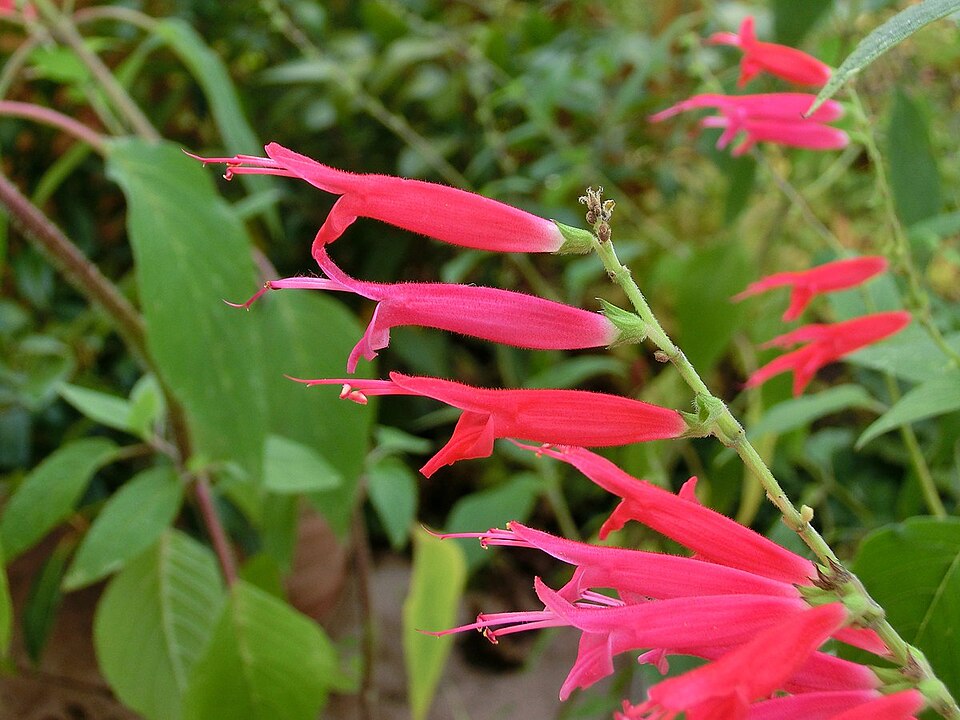
Pineapple sage can spend most of the year looking like a leafy herb. It grows into the space until the smaller things behind it are hard to see. Then, in a suitable position, it begins to finish the tips of its stems with red flowers just as the weather turns cool. Where frost arrives early, the whole show can be lost before the buds open. If you want the flowers as much as the scented leaves, decide how you will handle that short interval before you choose the position.
The plant sold as pineapple sage is Salvia elegans. It comes from warmer parts of Mexico and Central America and is often treated as a tender perennial or a summer annual in cold climates. Its leaves have a fruity scent when touched. The species can become a broad, substantial shrub in favorable conditions. Named cultivars vary in size and flowering time. For a small space, confirm the cultivar's expected spread and whether growers nearby have seen it flower before their usual first frost.
Give it natural nights and bright days
Study light at the edge of the proposed planting at two different times. Several hours of useful daytime sun encourage sturdy growth. At night, check whether a porch lamp, security light or streetlight shines directly on the leaves for long periods. Pineapple sage generally flowers in response to shorter days and longer nights. Persistent artificial light in the evening can interfere with flowering. If the brightest daytime position is under a lamp that stays on, choose a spot that gets light by day and normal darkness at night while still allowing safe access.
While you are outside, look at the sheltered corners in which fall weather tends to feel a little gentler. The lee of a low wall can steady stems without casting too much shade. An open position at the bottom of a hollow may allow cold air to collect. The exact effect depends on the garden. Compare the first surfaces that frost in your neighborhood. A place that stays protected just a little longer can give visible buds time to open. It is worth using that place when it also supplies enough warmth and light earlier in the year.
Allow for the size of the plant at the end of summer. A vigorous specimen needs room next to a path. A compact selection near a low wall can have a neat outline, while the straight species may reach well beyond the pot. Set the container down and hold a stake at roughly the expected height of the shoots. Check whether it would obstruct a needed view or occupy space intended for another mature plant. You can solve that problem early by choosing a smaller cultivar or changing the position.
Decide whether a movable pot buys enough time
An outdoor bed supplies a broad root zone and can support substantial leafy growth. In a climate where the plant survives winter outdoors, that may make it the simplest choice. Where freezing weather arrives around the time buds form, a pot lets you put the plant somewhere sheltered before the frost. You can use a bright frost-free place and still keep the long night conditions the plant receives outside. Avoid assuming that a warm but dim indoor corner will give it everything the flowers require.
Choose a container with reliable drainage and enough mix for the plant's size. Keep the weight and carrying route sensible. A large pot stays moist longer but will be heavy when wet. A small one can make watering difficult in a bright or windy position. A compact cultivar gives you more room to find a workable size. Choose a container intended for outdoor use and set it on a firm surface. If it stands on a wheeled base, use one rated for the load and secure it against movement while it is parked.
After moving a young plant outside, give it time to adjust to sun and wind. In a bed, set it at its nursery depth in well drained soil and give it room for the expected width. In a pot, use a suitable draining mix and keep the stem bases above the surface. Water thoroughly and check what reached the root zone. A plant just out of a nursery pot often needs a closer look than its larger neighbors. Keep the area free of dense competition until you see new shoots growing steadily.
Use summer cuts to shape the plant
Clip a few growing tips early in the season if you want a bushier plant. Cut above a healthy pair of leaves, where side branches can develop. Work around the shrub rather than trimming every stem to exactly the same outline. Check the next week for new shoots lower down. If the plant is short or growing slowly, wait until it is clearly established before taking more. A well placed branch is useful even if it extends in a slightly different direction from its neighbors.
If you intend to use leaves in cooking, ensure the plant is correctly identified and has been grown appropriately for food use. Pick a few sound, clean leaves as needed and wash them before preparing them. The aroma is most evident when a leaf is handled, so you can also position the pot simply to brush past it during ordinary garden work. Leave the healthy part of the canopy in place, especially during heat or as flowering season approaches. Heavy repeated cutting can delay the development of the tips you want to flower.
Taper pruning as days shorten and make selected cuts only for damage or access. Examine the ends of several upper stems in good light. Watch where the new leaves and buds are forming before you take anything for the kitchen. If you need to open a walkway, guide an undamaged branch away from it or trim a stem without a developing spike. The best canopy for a late display often has a few stems at different heights. It does not need to be evenly clipped.
Plan for the week the forecast changes
Keep the pot watered during active growth, allowing free drainage and checking the medium in hot weather. A plant grown in a summer bed also benefits from steady moisture when conditions are dry. By autumn the watering interval often lengthens. Feel down into the soil before watering, especially after you move a pot under shelter. A root zone that was drying in the wind can stay wet much longer once it is protected. Keep air moving around the stems and avoid leaving the pot in collected water.
When frost is forecast, consider the stage of the flowers and the means you have to protect them. A small pot can be moved early enough to avoid scrambling at night. A plant in the ground may be appropriate for temporary protection during a mild cold spell, depending on the local forecast and the materials you have. Remove temporary coverings in suitable conditions so they do not press on the stems or trap unwanted heat. A long run of cold nights gives you a different problem from one brief cold morning. In a garden that regularly freezes before bloom, try a locally recommended earlier cultivar the following year.
If you keep the plant through winter, check it for pests before moving it near houseplants. Give it conditions appropriate to a tender salvia and reduce water as growth slows. Use local guidance on overwintering if your winters are cold or damp. A healthy cutting taken during active growth can be a compact way to carry the plant forward if you do not have room for the whole pot. Start while the parent plant still has healthy shoots, using clean tools and a suitable medium. The time to take a backup is before cold has damaged the plant you want to keep.
A pot kept under glass can still be exposed to an evening work light. Observe the actual hours of darkness where the leaves stand before assuming that shelter solves the timing problem.
Use the bloom date to decide what to repeat
Record when buds first became visible, when flowers opened and when cold reached the position. Add one short note about any artificial light in that corner. If a plant gave months of attractive foliage but opened only a few flowers, decide whether the leaves alone were worth the space. You might choose a smaller position for the same plant and give a proven earlier bloomer the prime spot. If it flowered in the window between colder nights, keep that location available for next year and make its autumn watering and protection easy to reach.
A good place for pineapple sage balances three practical needs. The shrub must be easy to water while it grows, its tips must be able to develop during naturally long nights, and you must have an option when the first cold spell is close. Once those are in place, leave the top growth alone long enough to see what it does. A few red spikes over healthy green leaves can carry a small border well past the point when the earlier flowers have finished.
Further reading: University of Wisconsin Extension on pineapple sage.