7 min read
Keep Borage in a Small Bed for One Season
Plant a short patch for its blue summer flowers and decide where next year’s seedlings would be welcome before the first seeds fall.
On this page
A borage seedling looks easy to fit between two crops. A mature plant can unfold a mass of branching stems into the gap you left for reaching the other side of the bed. The blue flowers can be worth having there, especially if you can see visiting bees without brushing past the leaves. Work with the size of one established plant before allowing a scattering of young plants to fill the same area. Mark the part of the bed you are willing to give it and the part you will check for escaped seedlings after bloom.
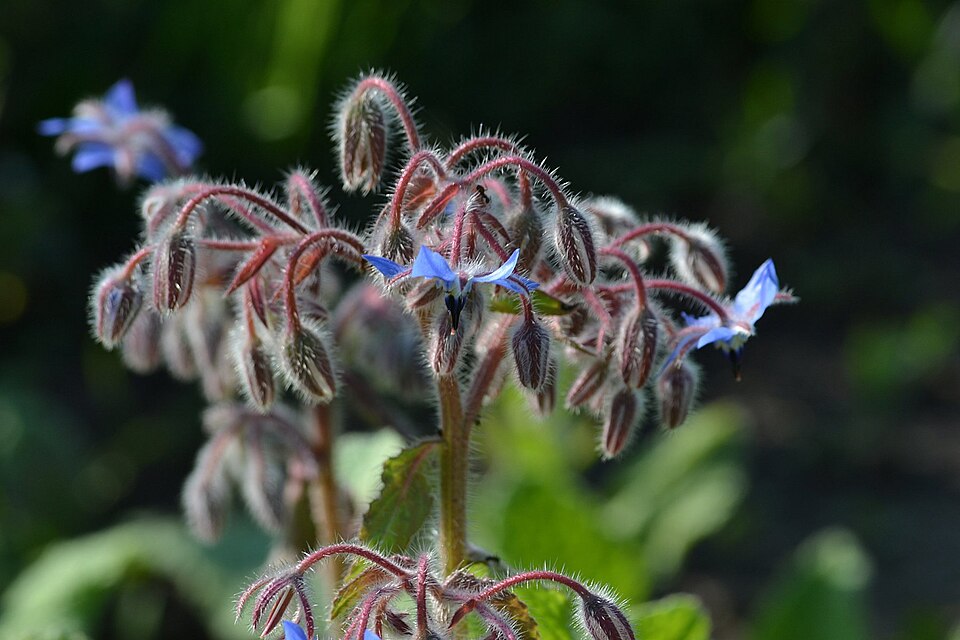
Borago officinalis is an annual. Another plant that appears in the same spot next year may come from the seed it left behind. Choose a labeled nursery plant or seed and use it as an ornamental. Its bristly foliage and star-shaped flowers are distinctive when it reaches size, but small seedlings are harder to recognize. There is no need to grow it for food or any preparation. Keep the focus on the view of the flowers and on how the planting behaves where you put it.
Clear a useful space around the first plant
Pick an open sunny spot or a site with some suitable light shade, and check that the soil drains. Borage can grow in fairly lean soil. The position should allow its spreading branches to reach outward without lying across your main garden route. Put a marker where a fully sized plant would have its base. Stand where you normally weed or water and check that your arms will not repeatedly brush its bristles. Leave extra room where the bed is close to a seat or a narrow gate.
Look for an unobstructed view of the flower stems. A plant slightly behind a low bordering plant can be visible without being constantly handled. If other plants will rapidly grow taller than the borage, put it toward a side rather than right behind them. A blue bloom on a branch hidden by a taller plant may still attract insects but do little for the display you hoped to see. Leave enough light around the upper part of the branch and clear room for a few stems to form their normal shape.
Avoid putting the trial at the back of a large mixed planting that will be inaccessible by summer. You will need to inspect fading stalks and the ground where seeds could fall. The first sowing can occupy one expected mature footprint rather than a long full row. If several seedlings emerge close together, you can keep one or two with enough space and compare the size once they begin actively branching. Let a small position tell you whether more space would be useful.
Start while you can recognize the center
Sow according to local conditions and the packet directions. An annual grown outdoors needs a suitable period in which to establish, flower and finish. Use a location marker before the seed begins to emerge. It lets you distinguish the planted spot from weeds and other volunteers. Water gently while the seedlings establish and check moisture below the surface in dry weather. A small seedling with limited roots still needs care even if a mature plant can tolerate some difficult ground.
Let the first true leaves develop far enough that you can identify their attachment. Select a vigorous plant that has enough space for the mature stems. Remove crowding once you can identify which seedlings you want to keep, preserving the roots of the ones you leave. If a second plant has a separate usable opening with steady light, give it a marker of its own. Several closely spaced seedlings may all appear vigorous at first and still make the mature planting difficult to maintain.
Try not to enlarge the trial simply because an early patch looks bare. Leave the extra soil around the branches accessible. A little open ground gives you room to determine how far a naturally wide stem can sit without rubbing on other plants. Where the bed is regularly watered for nearby crops, see how quickly the borage fills the opening. Rich ground or a steady water supply may produce more canopy than you expect. Note the normal height and width before adding another plant the following year.
Watch flowers without making the route harder to use
Visit the beds during bloom from a position that leaves the insects and stems undisturbed. Count which branches you can see clearly without reaching into the plant. The blue, star-shaped flowers may appear in a succession up the branching stalks. A faded flower beside an open one does not mean the entire stem should be cut. Follow the stalk far enough to see whether it still carries more buds. Keep a few sound stems in the best view while the plant is providing the color you wanted.
If ripe or damaged material hides the route through the bed, clear the specific stem that blocks it. Gloves and sleeves can make handling the bristles more comfortable. Use a clean cutting tool where practical and keep a container nearby for what you remove. On a vigorous plant, a partial cut after a flush may lead to new growth when conditions still favor it. Leave other parts intact while you see how it responds. Do not rely on that response if the season is ending or the plant is already weakened.
If the whole clump leans toward the rest of the bed, inspect it after the foliage has dried enough to handle. A poorly placed root ball or a narrow pocket may keep the branching stems from finding room. Adjust only what you need to keep the access clear. Some leaning branches are natural. A position that requires moving the plant continually is a useful reason to set the next sowing back farther from the path or to use fewer plants.
Compare the empty ground with the mature plant
Make a sketch from above at the time you first mark the bed. Add a rough outline of the stems when it is in full flower. On the same sketch, mark what was planted before it and what will need access after it. A bed of early flowers followed by borage can have a useful opening for much of summer. One that also needs a late sowing at the exact point where borage leaves fall will be harder to use. Put the next plant where the leafy branches can occupy the whole space during their useful season. You can improve the arrangement by moving the next sowing even if you keep the same number of plants.
Remove spent branches where seed is unwanted
After the first clear flush, examine the older stems for developing seed. Remove spent stalks before ripe seed falls if you want to limit spread. Work from branches that are about to finish to the parts that still hold open flowers. A single cleanup at the end of the whole season may miss earlier seeds. Check any low branches that folded under the upper foliage after rain. They can develop seed out of sight, directly over the open soil you intended to keep clear.
Use the marker you chose at sowing and walk around the outer edge. Observe where the main branches have leaned and where seed might have dropped. If you want borage next year and it is appropriate to let it reseed locally, keep only a modest number of seed-bearing stems in a deliberate place. Check local guidance where spread outside gardens is an issue. If you need to prevent seed dispersal, trim earlier and tidy the surrounding ground while you can still see the plant's outline.
Inspect after a later rain or during the next growing period. A few seedlings inside the intended patch may serve as replacements. Confirm what they are and thin if they occupy more than the original footprint. Remove unwanted seedlings early. When you find an outlier, note whether it lies downslope or beside an opening in the bed. This can influence which remaining branches you let finish the next season. Put the plant where these inspections can become part of your ordinary work rather than an extra trip.
Leave a smaller trial if one season was enough
Before the mature plant dies away, look at how much space the flowers really required. A narrow bed may work best with one plant beside a broad opening. If the patch was hard to maintain, choose a smaller planting or another suitable ornamental for that space. Keep your mark until you have checked for new growth in the area, then adjust the route or the sowing area based on what actually happened.
The annual can provide a clear blue show with a handful of branches when those branches are easy to see. Decide early which ones you will leave through flowering and check them again as they fade. That is enough to retain the flowers this year and keep the next garden open for the rest of the plants you want to grow.
Further reading: NC State Extension profile of borage.