7 min read
Growing Nicotiana for Scent at Dusk
Choose a fragrant ornamental nicotiana and give it a sheltered place where you can enjoy the flowers in the evening.
On this page
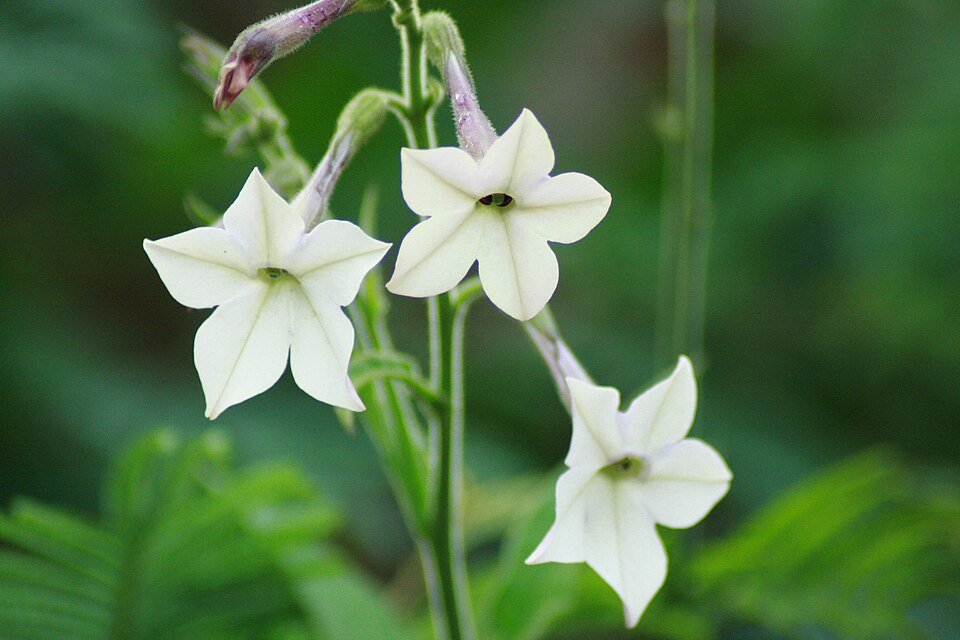
Stand where you spend time in the garden after sundown. There may be a chair just outside the back door or a corner that stays comfortable after a hot day. Nicotiana alata can bring fragrance to that spot. Its flowers have long tubes opening to pale, star shaped faces. They catch the last light, and fragrant forms can be easier to notice with your eyes closed once evening arrives. The choice of plant and the airflow around the seat make as much difference as the number of flowers.
You can find out how well this works with one plant. Give it enough soil and space to grow, then note when its flowers open and where the evening breeze carries the scent. Place it close enough to enjoy from your seat and outside areas children or pets can reach. To choose the right specimen and place it well, look at its habit, its mature height and what the label says about fragrance.
Look for fragrance on the label
Nicotiana alata is sold under names including jasmine tobacco and flowering tobacco. The botanical name across the label tells you which ornamental species you have, and a named selection may offer more predictable height and flower color. Other cultivated nicotianas belong to different species and hybrid groups. Some modern bedding selections are bred for short stems, a long display or flowers that stay open during the day. Fragrance varies among them.
Read the packet or nursery tag for a description of evening scent. A seller may list flower color prominently with the details of fragrance in smaller type. If the plant has only a general label, ask whether the supplier grows a fragrant line. At a nursery, a flowering plant lets you check flower shape and size. Scent can be hard to judge during the middle of the day, especially when wind moves around the benches. A written description of the selection is more useful than trying to decide from a single visit.
The straight species can reach several feet, and its broad basal leaves can cover a surprising amount of ground. Shorter strains can work in containers where the rim and adjacent plants need to remain visible. Read both height and spread. A pot with a broad base will support a tall specimen more reliably than a narrow one of the same depth. In a bed, give a larger variety space near the middle or back where neighboring stems have light and you can still reach the plant for watering.
Put the plant where the scent can travel
Walk through the proposed site around the time you want to use it. During the day, check how much sun reaches the soil. Nicotiana alata grows in sun or partial shade with fertile soil that drains freely and holds steady moisture. In a hot climate, a protected place with morning sun and some afternoon shade may suit a plant that struggles against a heat reflecting wall. In a cool climate, a brighter position can help it grow strongly. Shelter from sudden gusts is especially useful for a tall selection.
In the evening, note where the air actually moves. You might find a steady breeze crossing one end of a patio or barely moving near a solid fence. Move a pot to the side that usually sends air toward your seat. In a long border, start with one plant near the end you use most and give it room to flower. White flowers are often visible in the last light, and open space behind a pale flower can make it easier to see the stalk clearly from a distance.
Keep the ornament away from a play area, pet run, and places where children might gather flowers. Nicotiana contains nicotine, and chewing or eating any part can be harmful. Wear gloves and avoid skin contact when handling the plant, as the Royal Horticultural Society advises. A garden with good light and airflow where curious children or animals have unrestricted access calls for a different fragrant ornament. For a suitable site, choose a pot position that stays secure after a gust and a border position you can reach from a clear side.
Start a few seedlings or use one transplant
A nursery transplant is an easy way to test a variety. Look for an upright plant with several healthy leaves. Check beneath the leaves and along stems for clusters of small insects, and choose a root ball that holds together. Plant when the danger of frost has passed, according to the local season, and allow a few days of gradual exposure if the plant came straight out of a greenhouse. A sunlit outdoor wall can be much warmer in the afternoon and much cooler at night than covered nursery benches.
Seed is another option when a particular scented form is hard to buy as a plant. Level and moisten fine seed starting mix before opening the packet. Sow the tiny seeds on the surface where they can receive light and gently settle them against the damp mix. Follow the packet for timing and germination temperature. A clear cover can slow drying, with ventilation as needed. Let any standing water drain so the surface stays evenly moist. Use a gentle watering method so water does not wash the tiny seeds into one corner.
Give emerging seedlings good light and take off any close cover as they establish. Separate the strongest seedlings into individual cells or pots once you can handle them without pinching their stems. Ease roots apart from below and hold a seedling by a leaf if you need to steady it. The seedlings can spend increasing amounts of time outside once they have rooted well, returning to shelter when conditions turn cold or unusually windy. A few strong transplants give you enough plants to try two positions without crowding the garden.
Water where the active roots are
Set the transplant at about the same depth it grew in its pot and water around the root ball. In a bed, choose ground where water moves away after heavy rain. If the site collects water, choose a better drained position or plant in a container. For pots, use fresh potting mix that drains freely and enough volume for the size on the label. Keep water openings clear beneath the base. Pots up against a wall may stand in a rain shadow even when the rest of the garden is wet.
For the first week after planting, touch the soil near the original root ball before watering. The transplant is still drawing most of its moisture from that small area. Once roots spread, check a few inches out from the stem. In dry conditions, water slowly at the base until the root area is moistened. For a container, let the excess drain from the base. A pot in hot afternoon wind may use water much faster than the same size pot a few feet away. Use how the mix feels to decide when to water again.
Watch a tall plant while flowers develop. A stem leaning a little toward the light can still be sturdy, while a plant rocking at the base after every breeze may need a thin stake. Put the support to one side and tie loosely. A container that regularly tips needs a wider base or a calmer place to stand. Set flower pots where you can approach with water and shears without brushing against the plant on your way in or out.
Look for health and flowering together
Young leaves with fresh holes deserve a look at the base of the plant in the evening. Slugs can shelter beneath a pot or in damp debris nearby. Check the underside of wrinkled new leaves for aphids. Small numbers may call for another observation in a few days, while a colony growing rapidly is easier to address early. Keep suitable space around the plant and remove fallen material gathering at its base. A sheltered place benefits from an exchange of air even when the plant is protected from the strongest wind.
As flowers fade, follow a finished stalk down to a branch or a healthy leaf before taking it out. Check for unopened buds along the stalk so you can leave flowers still to come. Where you want to limit seedlings, remove finished heads before the seed reaches maturity. Look up local guidance before adding self sowing ornaments near unmanaged areas. Choose a locally appropriate plant if ornamental nicotiana is discouraged where you garden. Frost often ends the outdoor display in places with a cold winter, and useful time in bloom varies with when the plant was established.
Give the first flowering stalk a few evenings before judging the position. Walk from the patio to the plant at dusk and observe where the scent reaches you. If the pot stands in a wind tunnel, turn the corner and try it under a bright shelter. If it stands in a still recess, move it a little closer to a place with moving air. A few more feet of distance from a door might bring the scent closer to the chair if the breeze travels that way. Watch the flowers at the new location and check that the plant still gets the light it needs.
A simple record of which selection you planted, how tall it grew, and when the scent was clear is enough for next year. If a fragrant plant fits the space, you can repeat it. If the display worked best in one particular corner, plan the following season around that sitting spot. One well placed plant is often enough to give an evening garden a scent of its own.
Further reading: Royal Horticultural Society profile of Nicotiana alata.