7 min read
Give Nodding Lenten Roses a Better View From the Path
Place a hellebore where you can look into its flowers, and distinguish winter wear from foliage that needs removal.
On this page
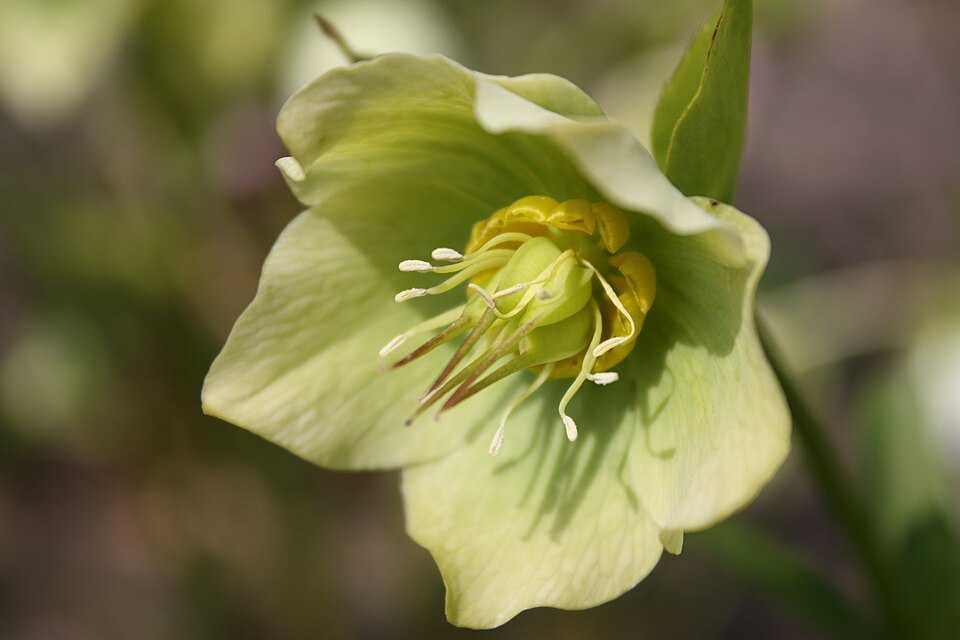
On a flat bed, it is possible to walk by a flowering Lenten rose and see only the backs of the flowers. The stems are upright enough, but the flowers on many plants turn down. The view improves when you approach from lower ground or when the clump stands in a border raised just enough to meet your eye. Work out that angle before planting. A useful viewing line is easier to make with the ground you already have than by lifting the flowers every time you want to see them.
The familiar garden Lenten roses commonly belong to Helleborus × hybridus, a group of hybrids and selections. Helleborus orientalis is one related species. Nurseries sometimes use the names loosely, so check the label and look at how the chosen plant grows. Hellebores vary in habit and timing. The advice about removing older leaves here applies chiefly to garden Lenten roses. A different species can carry leaves and flowers on the same stem and may need those leaves left in place.
Find a viewpoint in ordinary traffic
Hold your hand where the flowers are likely to be, using the approximate height on the plant label, and look from the direction you normally use the path. On a gentle slope, the uphill edge may show the flowers at a useful height. On level ground, a raised border or terrace can offer a similar perspective. Leave enough room inside the edge so leaves do not extend into a narrow walkway as the clump matures. Many plants keep useful foliage for much of the year, so the width of the clump matters long after that first display.
Check the location in late winter or at another time when the plant will flower in your area. Keep winter access in mind. A position several feet beyond a damp bed can be difficult to reach without stepping on nearby bulbs or compacting wet soil. A narrow usable path gives you a way to see the flowers and clear damaged foliage. Approach it from more than one direction. If the usual view faces into bright glare or a dense tangle of old stems, shift the clump into a quieter part of the border.
Consider what will grow overhead while the flowers and leaves are active. A deciduous shrub may allow light early in the year and offer partial shade later. A heavy evergreen can shade the clump throughout its season and compete for water. Look at the ground after rain and through a dry spell. The plant needs a suitable root zone as well as a good view. Keep it out of a low spot that repeatedly holds water, even when that is the natural place to look up into the flowers.
Plant for a long stay
Give a garden Lenten rose shelter, partial shade and reasonably fertile, well-drained soil where these conditions suit the variety. Improve the bed broadly with suitable organic matter if needed, taking care near existing tree roots. A clump is easier to establish where water moves through the soil rather than collecting in a deep hole. Set the plant at the depth it grew before. Cover the roots, keep the growing points clear and water the fill so it settles around the root ball.
Water when the root zone needs it during establishment, checking the depth of moisture rather than relying on a light shower. A moderate layer of organic mulch can keep the surface from drying too quickly. Keep it away from the crown. Heavy leaves or garden debris can build up against the plant after winds or nearby leaf fall. Move that accumulation back and leave the base visible. The contrast between a clean crown and a quiet backdrop also makes the first emerging stems easier to notice.
If you can buy during flowering, compare several plants from the side. One plant may carry more outward-facing flowers than another. Another may show speckles or darker color you would never see clearly from above. Choose the real plant and place together. Flowers of seedlings from a garden clump can differ from those of the parent. If an exact color or form is important to the design, keep the nursery label and treat spontaneous seedlings as possible additions rather than guaranteed copies.
When you plant near a stone edge, check the bed just behind the stone after a storm. Water may reach the crown from a different direction than you expect. If the edge is dry and the soil immediately behind it is wet, place the plant where the roots can extend sideways into a more even patch. On a balcony or in a paved space, make the same comparison with the drainage of the container and the height of its stand. A secure low stand can improve the view of the flowers without forcing the pot into a dim or constantly soggy corner.
Open the view by working from the base
Late in winter or early in spring, look for where new flower stems and leaves emerge. On many garden Lenten roses you can remove older leaves to reveal the flowers and reduce the amount of old tissue carrying fungal leaf spot. Trace each older leaf back before clipping. Use clean snips and keep the tips out of the small group of flower buds. Work slowly if several stems grow close together. A few unwanted leaves remaining is easier to correct than a flower stem cut off by mistake.
Handle hellebores as ornamental plants. The plant is toxic if eaten and sap can irritate, so use gloves and keep cuttings away from children and animals that might chew the plant. Set a small container beside you for debris rather than dropping leaves where you will have to find them later among other shoots. When you finish, look from the path. If the flowers are already visible, further trimming may offer little advantage. Another hellebore nearby can need different care if it produces its flowers on leafy stems.
Check the new canopy again when it opens. Foliage can fill the border after the flowers, which is part of the appeal of a mature clump. Keep enough healthy leaves to let the plant grow normally. If you remove a damaged leaf later, do it because of its condition or because it is crowding a specific growing point. A routine in which all leaves are removed repeatedly gives you little opportunity to see how the plant responds to the site.
Separate leaf spot from ordinary winter damage
Old leaves can become dry and ragged from weather. Hellebore leaf spot may appear as dark dead areas on foliage, and affected tissue can carry disease forward. Look at the pattern and how recently it appeared. Check whether new leaves or flower stems are also affected. Remove diseased material promptly and handle it according to local guidance. Clean your tools after pruning a suspect plant before working on its neighbors. Give crowded clumps enough room for air to move where you can improve the planting without damaging established roots.
Black streaks, distorted growth and unusual stunting can point to other problems that deserve a better diagnosis. Use clear photographs of the whole plant and affected details and consult a local horticultural service if symptoms are serious. Avoid sharing divisions from a suspect clump. A few scorched edges following a windy cold spell are a different observation from repeated serious symptoms on new growth. Keep the records separate so the response fits what you actually find.
After flowering, remove selected spent stems before pods open if you want to limit seedlings. If you leave some, watch for young plants near the parent and thin where they crowd its crown. A few seedlings farther into the border can become useful, but the plan for the path still applies. Plants that come up exactly where you step will be easier to move or remove while they are small. Mark any young one you intend to keep before tidying the rest of the bed.
Protect the sightline as the plants mature
Check the view the next season from the place where you first tried it. A low neighboring plant may have become tall enough to hide the flowers. You may need to trim or relocate that neighbor, or simply leave the unobstructed part of the path as your regular viewpoint. A long-lived clump can stay in position if its roots and canopy are healthy. Divide a suitable plant when you have a reason and the divisions can establish, such as early autumn or just after flowering in appropriate climates.
Look at the relationship between the mature mound, the place you stand and the part of the garden behind it. A single healthy clump can carry the whole early view if it sits at the right height. Keep the ground around it easy to reach in wet weather and the living crown clear of debris. Showing the flowers well takes a little attention to the way they hang and the way you pass them. Once the position works, cleanup can stay limited to what the plant needs.
Further reading: Royal Horticultural Society guide to hellebores.