7 min read
Plan the Summer Gap After Bleeding Heart
Give an early spring clump a neighbor that fills the view after dormancy while leaving its next shoots room to rise.
On this page
A bleeding heart may reach across half a shade bed in spring and leave an open patch in summer. For a new gardener that change can be alarming. A healthy old-fashioned bleeding heart can slow, yellow and go dormant after flowering, especially as conditions turn hot or dry. The best way to use the plant is to leave room for its spring shape and think about what will be visible from the path once that shape is gone. Give it a neighbor that can occupy the view later without growing directly over the place where the next shoots will emerge.
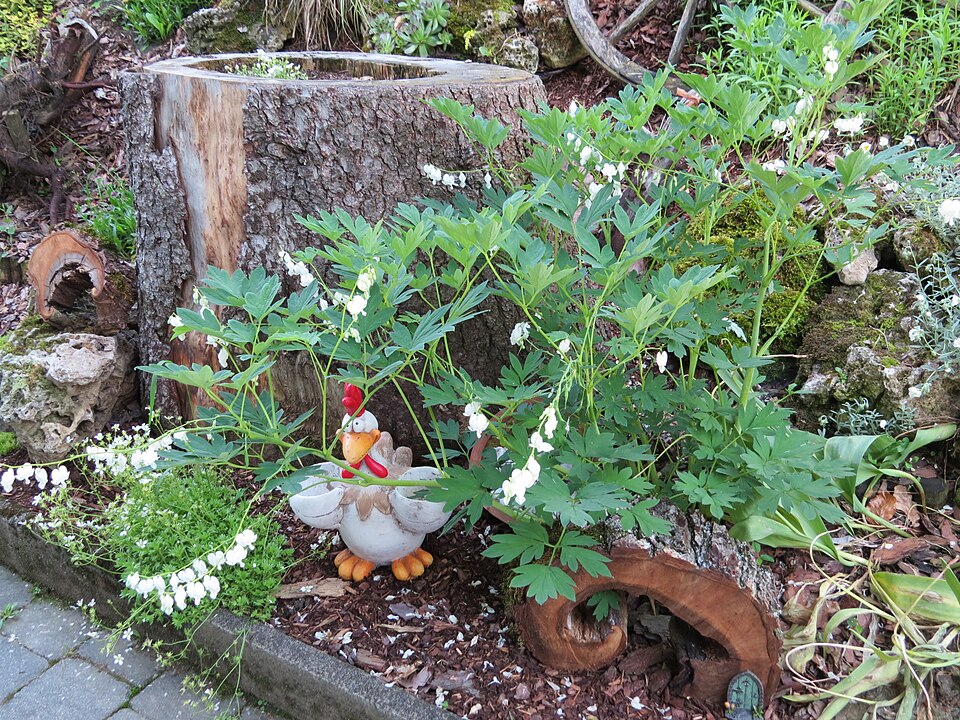
Old-fashioned bleeding heart is Lamprocapnos spectabilis, formerly called Dicentra spectabilis. The familiar flowers hang in a row from fleshy arching stems, with pink and white forms in gardens. A white-flowered specimen does not necessarily indicate a particular named cultivar. Related plants sold under similar common names can stay leafy or flower over a longer period. Learn which plant you have before planning the pattern of bare space around it. The goal here is to accommodate the seasonal change of the old-fashioned form.
Mark the spring reach first
Imagine the plant at the width given on its label. Set a marker at the expected center and outline where the arching stems might end. Leave the outer reach clear of a narrow walkway. A close position can show the outline of the flowers while the clump is still small. At full size, foot traffic may brush the soft stems even when the crown is well back from the edge. Move the proposed position if the plant could occupy the same space as the door or garden cart during flowering.
Check the view from the place you normally stand. If the stems hang across open ground in spring, you can see the sequence of flowers clearly. A densely planted neighbor directly in front might hide the lowest stems. A broader margin gives you a choice of viewing from the side and lets a nearby plant grow after bloom without occupying the middle of the root area. Mark the planned crown or make a rough sketch relative to a permanent stone. You will want that reference after the leaves die back.
Choose open shade or a place with some morning sun and protection during the hot part of the afternoon. Moist, humus-rich soil with good drainage is a useful starting point. A dry corner may make the clump retreat considerably sooner, while a cooler place where soil remains fresh may hold foliage longer. A low position that stays wet around the crown is a poor substitute for steady moisture. Sample the soil after rain, then compare it on a warm dry day. Place the plant where you can water it in its active period.
Give the later neighbor its own root area
Look at the border from spring and summer viewpoints. A later mound does not have to occupy the same footprint to conceal the gap. A plant closer to the path can obscure part of the ground behind it after putting on summer growth. A clump at one side can lean toward the empty space without its center resting directly above the bleeding heart. Start with a mature-size estimate for both plants, including how fast each one spreads. A covering plant that becomes too large can hide tender spring shoots before you even see them.
Use a well suited restrained neighbor for the soil and light you have. Examples might include a clumping fern or a later developing shade perennial, with enough separation for both mature crowns. If the neighbor shoots up quickly in spring and already blocks the view, place it to the side. If it has traveling stems, examine whether you will be able to manage them in that narrow space. The intention is to fill a sightline for part of the year while keeping the bleeding heart's roots visible and reachable during planting or cleanup.
Plant the bleeding heart at the depth it grew before. Work in a suitable season and protect fragile stems and emerging shoots while handling them. Water deeply enough to settle the soil around the roots and maintain reasonable moisture while the plant is in active growth. Keep any surface mulch away from the crown. Plant the later neighbor in its own opening. That second hole should leave the first plant undisturbed. In the initial season it is fine to leave a wider gap and wait to see how both develop.
Recognize the quiet part of the year
Once flowering finishes, look at the sequence of changes in the clump. Drifting yellow across older foliage as weather warms can fit ordinary senescence. In a cool, moist season the leaves may remain for longer. Keep the plant watered appropriately while the leaves are active and give the soil a chance to drain. Vigorous fresh leaves suddenly wilting in persistently soggy ground deserve a separate check. Observe the root zone and the condition of the stems before assuming every change is dormancy.
Do not saturate the bed in an effort to make the foliage stay green. If the leaves are naturally fading, let them finish. A fresh younger leaf at the inner edge may still be helping the roots even when older stems have yellowed. Wear gloves when handling foliage because it can irritate skin. Trim or lift fully dead tops where they make the planting untidy or obstruct access. Leave the original crown marker in place so you can find the dormant plant without guessing from the curve of its last stems.
Use a separate note for any sudden damage and its timing. Broken stems next to the walk might have been brushed, while several soft stems in a wet area may warrant closer inspection and local advice. Photograph the whole clump and the soil level when the problem is visible. If the rest of the garden has the same seasonal change, it gives you something to compare. A record of the last healthy leaves is useful when deciding next season whether the neighbor began to crowd the plant too early.
Adjust what fills the gap in summer
Stand at your usual viewpoint once the spring shape disappears. Decide whether the later foliage does enough. Open ground beneath a wider planting can be useful for water and access, and it may be barely visible from where people pass. Where a bare patch is conspicuous, shift the intended view with one suitable plant to the side rather than putting another perennial directly on the dormant crown. Check in the spring that new shoots can rise on the original side before the later plant has spread.
Avoid digging into the empty patch when making changes nearby. Use the location marker and the earlier photo to find the clump. For temporary color, a small pot placed next to the bed can be easy to move. Keep it off the soil directly above the crown and ensure you can lift it safely without reaching across the bed. A pot can be removed when the spring plants return, which gives you an opportunity to try a different layout before committing to a long-term neighbor.
If the spring show was small and the plant is otherwise healthy, allow time before moving it again. An established clump can give a more informative display than several plants repeatedly transplanted to cover gaps. Seed propagation takes time, and resulting flowers may vary from those on the parent. Where a particular form matters, keep the label and use properly identified nursery stock or suitable divisions at the right time. There is little reason to multiply a trial planting until you know how its summer gap will fit.
If the neighbor was recently planted, judge the summer gap over more than one season. A young fern may make the right shape without yet reaching its expected height. Take a picture from the path at that stage and use an empty pot as a visual reference at the expected future edge. That can help you decide whether to wait or whether the planned position will always leave the largest bare patch in view.
Check the handoff from spring to summer
At the beginning of the next season, inspect both plants before either fills the frame. Look for early shoots where the original crown was marked and enough light around them as they rise. If the neighbor has entered that space, move part of it back at a time when both can handle the work. Then compare the same viewpoint after bloom. A quick photo in spring and a second photo later in summer are enough to judge whether the foliage handoff worked.
Keep both views in the plan. The spring plant needs room for its full arch, and the summer bed can look complete even with a resting crown below. Choose the positions from which each plant contributes during its own main season. A bleeding heart that vanishes on schedule can have the effect you wanted, so long as the place to see its flowers is still open when it returns.
Further reading: University of Wisconsin Extension guide to old-fashioned bleeding heart.