7 min read
Set Up Runner Beans for a Two Sided Harvest
Plan a support you can reach from both sides, then follow the scarlet runner from its first climb to the last picking.
On this page
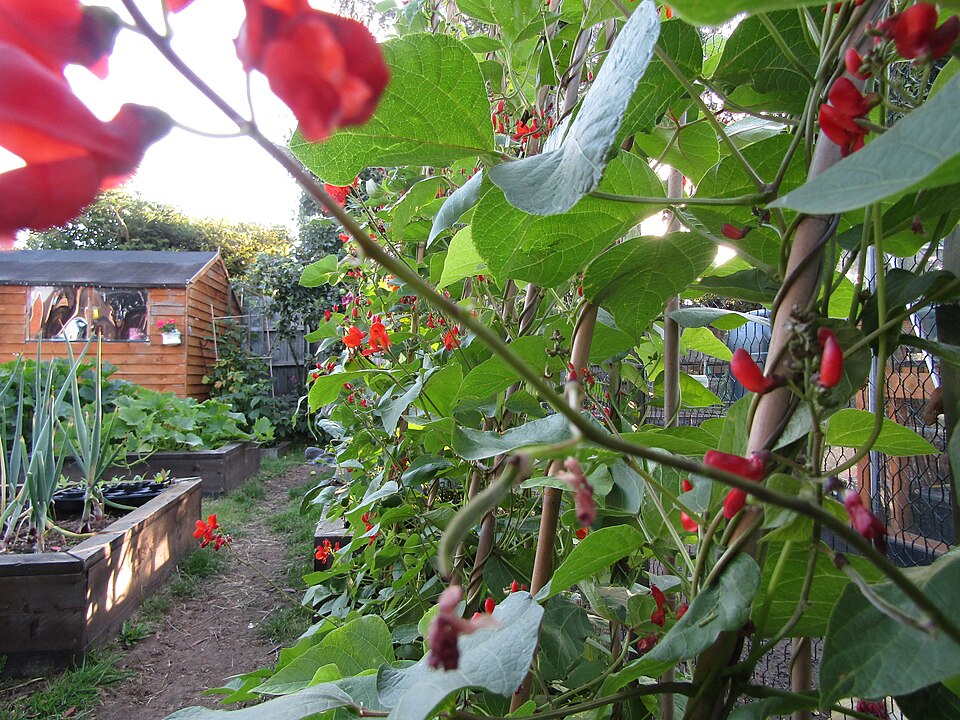
A respectable wall of runner beans can produce one row of pods you pick and another row you never see. It happens when the support is placed too close to a fence. Early in summer that generous screen looks splendid. By picking time the best pods often hang on the hidden side, and reaching through the leaves can disturb flowers and vines. The extra space to walk around the frame pays for itself at that point. Plan access before choosing the size of the planting, even if it means growing fewer plants.
Scarlet runner beans are Phaseolus coccineus. They make twining vines with conspicuous flowers and, in suitable conditions, long flat pods. Some varieties sold as runner beans have pink, white or bicolored flowers instead of scarlet. You can choose for the screen or choose mainly for eating. In either case it helps to know how vigorous the variety is before deciding where to put the frame. Climbing forms are capable of growing well above the height a person can reach.
Mark out the harvest path before driving the first stake
Lay out the frame footprint with four markers and carry an empty picking basket around it. Check whether you can turn comfortably at the ends and reach the inside plane from either side. An A-shaped frame with a path on each side lets you inspect both faces. A flat upright frame can work very well where you want a narrow screen. A teepee requires less space in most directions, but the inside can become difficult to reach once the stems cross at the top. Try the movement you will need in a few months before putting a plant at each point.
Place the support where the shading it casts will be acceptable. A screen that protects a chair from light may cast the same shadow onto a bed that needs warmth. Watch the position of nearby structures and crops as well as the usual wind direction. The empty frame catches very little wind. A mature screen of leaves can pull much harder on its anchors, particularly just after rain. Anchor and brace the frame to suit your ground and local weather. Use materials intended to carry that load, with no sharp ends or loose lines across a walkway.
The strands running up the support need to be narrow enough for new shoots to wrap around. Poles, tightly secured garden twine or properly installed trellis can all provide that route. Tie them off before plants go in so you do not have to work near tender roots later. Give each planting position an available route upward. When two vines start from opposite sides of a path and both grow toward one pole, you can spend a surprising amount of time putting them back where you wanted them.
Wait for an outdoor start the plants can sustain
Runner beans are frost tender. Wait until the risk of frost has passed and the soil has warmed for outdoor sowing. In a cooler season, start a few plants under cover in individual pots and plant them out once conditions allow. The seedlings are vigorous when warm. Starting too far ahead can leave you with long stems tangled together on the windowsill. Check the local forecast and the vigor of the seedlings together. Keep first leaves protected during hardening off, especially on bright windy afternoons.
For direct sowing, prepare the ground at the base of the frame and follow the depth and spacing on the seed packet. A sunny bed with enough moisture for the growing season works better than an exposed strip of dry fill beside a wall. Use locally appropriate soil fertility guidance. Ordinary garden soil that already grows vegetables well is a better starting point than a newly filled, excessively rich pocket. If runoff from the frame runs to one end, check whether that end will stay too wet before sowing in every position.
Retain a few spare seeds or seedlings in case an early position fails. A missing plant becomes harder to replace once its neighbors are racing up the frame. Look for what happened before reseeding. A soft seed in cold ground suggests waiting for better conditions. A seedling cut close to the soil invites looking after dusk or checking for physical damage. If a single small gap survives to midsummer, the adjacent vines may cover it on their own. Filling it late is worthwhile only if the new plant will have room and time.
Give new stems an obvious place to climb
A young vine can run along the ground until it enters reach of the support. When it is long enough, guide it gently to its own line and leave the tender tip free. Check the next day if it fell back. Runner stems can be damaged by tight clips or repeated bending around a cold rigid cane. Use a soft tie only where it is useful, and remove it when the plant holds itself. A removable marker on the support can tell you which cultivar belongs to that section after the leaves have joined.
At the top of the frame, some shoots will seek another direction. If you can guide them along the upper brace while standing securely on the ground, give them useful lateral room. Where they become an unreachable tangle or extend into a path, pinching selected tips at a reachable point can help keep the screen manageable. A frame too tall to inspect safely remains difficult even if you trim a few vines. For next season, measure where you actually picked comfortably before raising the support any higher.
Water while active growth, flowering and pod fill are under way. Test the lower soil rather than relying on the appearance of leaves at the end of a hot day. Where the canopy becomes dense, rain can hit the leaves and run beyond the original planting line. A slow soak around the roots is more dependable in dry weather. Keep the ground weeded and lay a modest mulch once the seedlings are established and the soil has warmed if moisture loss is a regular problem.
Compare flowers with pods on the next visit
Flowers can be conspicuous without turning into pods right away. Look for tiny pods starting behind some spent flowers, and check whether they are missing on one side or along the whole frame. Hot, dry conditions or interruptions in moisture can reduce pod set. Give the plants steady care and look again as weather moderates. Pollinator access matters to many runner beans, so keep their flowers out of unnecessary coverings. Where prolonged heat is a familiar problem, choose planting dates and cultivars with local advice.
Walk both sides of the frame as soon as the first pods appear. Pick pods while young and tender at the size suited to your cultivar and kitchen use. Older pods can become fibrous. Hold the stem when cutting or snapping a pod so the vine is not yanked off its support. Check the lower leaves and the deepest gaps last. Pods that hang straight down on the reverse of a leaf are especially easy to miss. A bowl of modestly sized pods is more useful than the same weight of thick ones you overlooked for another week.
Cook beans appropriately before eating, and follow trusted food safety instructions if you let seeds mature for dry use. The ripe seed is a separate harvest with different handling needs from a basket of tender pods. If using the plants chiefly as an ornamental screen, make clear which mature pods you intend to leave, and keep an eye on the frame after rain weighs down the foliage. A fixed end point for the screen simplifies autumn work if the frame also serves another crop.
Leave the easiest access point clear even as the season turns. If a late neighboring crop fills the path, pick the mature pods from that side now, while you can still reach them without moving either planting.
Lift the screen while its shape is visible
When the plants have finished, cut vines in sections you can handle. Avoid tugging the whole canopy loose at once. Without its main points of attachment, a heavy wet mat can pull a light frame sideways. Clear loose ties and note which stakes shifted. Once the vines are gone, it is easy to set all the poles back along exactly the same line without remembering what got in the way. Make a note of the narrowest part of the picking path while it is still fresh in your mind.
Compare which part of the row yielded pods you used with which part gave you mostly foliage. Keep positions where the plants received good light and the harvest was within reach. Move the end of the frame away from a cramped doorway or any bed that was shaded too long. A few plants on a sound structure with two accessible faces can deliver a surprising amount of food. Build next year's frame for the person who must pick it when the vines are full.
Further reading: Royal Horticultural Society guide to runner beans.