7 min read
Space a Low Prairie Dropseed Row for the Mature Mounds
Lay out a sunny gravel path planting by adult width and keep early gaps open while the slow growing grasses establish.
On this page
The first year of a prairie dropseed row can have more visible ground than grass. Young plugs stand a long way apart when they are placed at mature spacing. It is tempting to fill every opening with a second grass. Several seasons later those extra crowns may reduce the whole row to one mass of leaves. Give each mound its own semicircle of floor space. The space between them is part of the reason to plant this grass by a path. It lets you see the curves of the leaves and gives you a way to weed while the plants are still small.
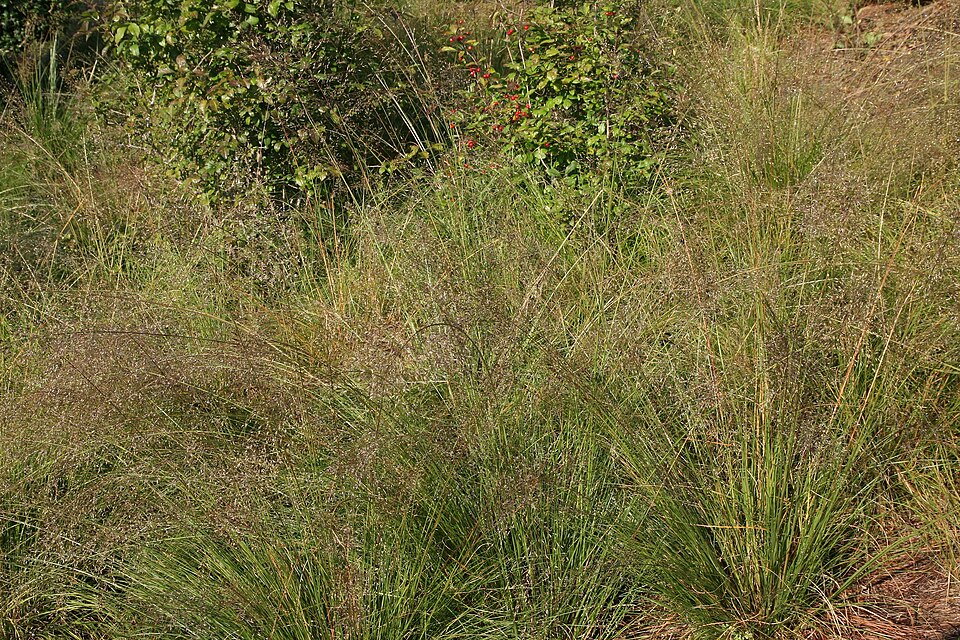
Prairie dropseed, Sporobolus heterolepis, is a fine-leaved, warm-season grass native in much of central and parts of eastern North America. It makes arching clumps, with open flower stems above the leaf layer from mid to late summer in many places. It can be long lived once settled and can take several growing seasons to form its mature outline. Plan for the stage in which it will stand two or three feet across, or the width appropriate to your selection, and a smaller stage in which you can still work freely on both sides.
Set out two widths before you buy more plants
Measure the actual path where you want the row. Mark its usual walking line. Outside that line, place a marker where the first crown would sit. Use a length of cord to show the approximate width of a fully grown mound. Allow a further margin wherever people need to turn or carry things. The fine leaves can extend beyond the center by more than a person expects from a nursery plug. A little movement at the tips of the blades is attractive. The leaf base should stay far enough back that the path remains usable when the foliage is wet.
Set another marker for a second clump, with room for it to appear as its own plant even when both mounds have filled out. Stand at the angle from which you usually see the path. Where a nearby wall or larger plant casts a strong shadow, shift the marker to preserve usable light. An offset row can be natural looking without a continuous stripe of plants. A wider break at a step or change in direction gives the lawns and flower beds nearby their own edges.
Find one place where the airy flower stems will be visible against a quieter background. Light coming from behind the seed stems can make them easier to see. Watch from your ordinary route when the sun is fairly low. A dark planted area, a quiet wall or a distant group of leaves can all be useful behind one clump. Set the whole layout for the space you want to use over the growing season, and make this backlit position one detail in that plan. The plant still needs full sun and soil that drains to perform well over time.
Start with plugs or rooted nursery divisions
Select nursery-grown plants appropriate to the local range and purpose of the planting. Small plugs can be economical, but require patience while they make a mound. Larger nursery divisions may show the expected shape sooner. Ask the nursery about the mature size in local conditions. Plants raised from seed can take several seasons to flower. That growing period is part of the plan, not an indication that every opening beside the path should be filled with more crowns in its first year.
Prepare only as much ground as you can keep weeded. Choose a sunny, well-drained position. If the path gravel has compacted the soil beneath the proposed crown, move back into better ground or address compaction where it can be done without damaging the path. Plant each at its original level, firm loose soil gently and water it in. Check that water reaches the center of the root ball rather than running directly between fine soil and the gravel outside. Mark the crown and the full intended line so you can see how quickly the gap between plants is changing.
Water the small plants through dry periods while they establish. Established prairie dropseed tolerates dry conditions better than a newly planted plug. Check with a small soil sample in the root zone and water deeply enough to reach it when needed. A dry path edge with a shallow new crown needs attention before leaves brown throughout the plant. A constantly wet planting hole is a different problem. Watch for signs of poor drainage after a storm, especially where water from the path collects at a low point.
Keep the first gaps useful
You can leave open ground between the young plants and use it to reach the crown or remove weeds. Keep any mulch clear of the bases, and do not extend the path surface so close that it buries small growing points. A clean margin makes the individual plants easy to count in spring. Where a young plug is difficult to see, a thin stake at a predictable distance is useful. Keep the mark visible through surrounding annual weeds and winter leaves.
If bare ground seems too much in the first year, use a manageable temporary planting only where the grasses will remain easy to see and water. Choose something you can remove without disturbing their roots. Leave most of the nearest open space clear so early weeds and other grasses are identifiable. Take a second measurement near the end of active growth. A modest increase in the diameter of each clump may not seem like much until you compare it with your original cord.
Pause before putting another permanent plant into the gap. Look for continuity of the row from the path and for the change in position after the leaves arch. If one plant failed, wait until you understand why before replacing it. A wet pocket along a gravel edge can stay different from its neighbors through many seasons. Repeating the same plug in that pocket does little to correct drainage. You have the option to leave the space open or move the line a little farther back.
Keep the flower layer without crowding the leaf mounds
Notice when the open panicles emerge, and compare the flower layer with the height of the leaves. The stems can look almost translucent at some times of day. The flowers may have a noticeable scent, and descriptions of it differ. Give yourself an opportunity to see and smell the mature plant instead of choosing it on the strength of one description. A place that shows the entire low outline can be useful even when you rarely notice the scent.
Leave standing stems through winter where they hold their shape and do not obstruct the path. The leaves often turn bronze or straw-colored as the season cools. Remove pieces that have fallen into traffic and leave the rest to keep the edge visible until cleanup. Cut old growth before new shoots begin to extend in spring. Inspect the center before working and leave growing blades intact. A low mound can be harder to see under a drift of old leaves than it appeared when the upper stems were standing.
Keep a record that shows the early rate of growth
From a fixed point on the path, take a photo with a stick or a stone already present as a scale. Repeat near the end of each growing season rather than comparing a spring plug with a full fall mound. Record any plant that was replaced, because a recent plug will look smaller than neighbors planted earlier even when the spacing and soil are the same. Check the outer ends of the row first for weeds and damage from feet. These openings often get more wear than the protected middle.
If enlargement is slow but the plants remain healthy, keep the original distances until you have an adult clump to compare. Measure the biggest sound plant from leaf tip to leaf tip, then see whether its width matches what you planned. That single measurement may prevent several unnecessary plantings.
Extend the row after the spacing has made sense
Compare the first row at the same time of year after several growing seasons. If the foliage circles nearly touch but the path is clear, you can use the same spacing for another short length. If they have filled more of the walk than intended, offset the next crowns farther back. Measure the width of the actual plants rather than guessing from how wide their flower stems sometimes appear. Those two dimensions can be quite different when the stems are lit from behind.
Maintain a few clear openings whether you add more length or keep the original group. They give the low mounds their separate rhythm and give you a direct view into the first few inches of each crown. A repeated planting does not need to fill every open space to look settled. Let each grass develop its own shape and add another only where its arching leaves will have a place to fall.
Further reading: University of Wisconsin Extension guide to prairie dropseed.