7 min read
Try Brunnera for Its Summer Leaves as Well as Its Spring Flowers
Compare a green clump with a silver selection and see which part of the shade stays cool enough for lasting foliage.
On this page
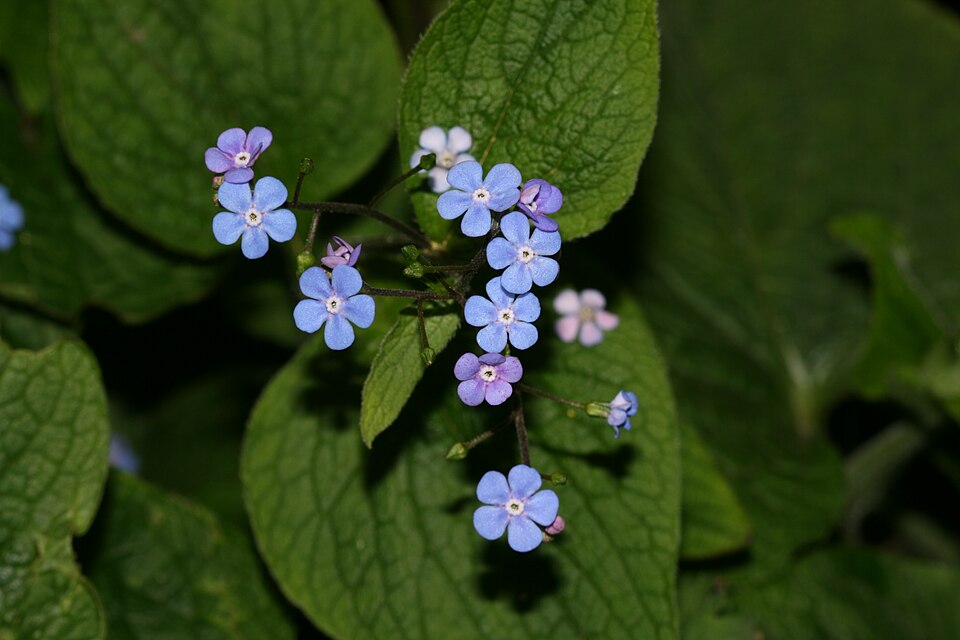
A spray of blue flowers in spring can sell you on a ground planting before the real scale of the plant is visible. With brunnera, the heart-shaped leaves that develop afterward will occupy the bed for a much longer part of the year. Try one green plant and one silver-leaved selection if that choice matters to the design. Watch what their leaves do when the weather warms and the shade becomes denser. A specimen that looked subtle in a flower display can be a broad, useful patch of texture later. Another might show a pale pattern beautifully but suffer where the afternoon sun reaches its margin.
Brunnera macrophylla is a rhizomatous clump-forming perennial. Its small blue flowers remind many people of forget-me-nots, which belong to a different genus. The flowers may appear over leaves that have yet to reach full size. A mature plant is best planned around the size and pattern of its summer foliage. Decide which part of the view should remain green and which could use lighter leaves. Then give the selected plants conditions in which you can see that foliage without spending the rest of summer correcting the site.
Look beyond the first bright flowers
In spring, photograph the proposed area from along the path and above it. Notice whether the flowers are likely to be seen against bare soil, another flowering plant or brighter foliage. In a generous bed, a green brunnera can offer calm texture behind a low row of flowers. A silver selection can lift a darker corner or make the path edge easier to distinguish at a glance. If nearby plants already have a strong leaf pattern, leave room for each pattern to be visible. Start with one or two clumps and see which view will remain effective once neighboring leaves are full.
Ask how wide the labeled plant is expected to get. Check the width of established leaves, not just the nursery pot. Leave enough space between the two if you want to compare their separate outlines. Set them far enough from the path that you can read the foliage without stepping around it. If the outer leaves need to hang over a low stone edge, make sure the stems do not rub repeatedly. A narrow strip of stone can make a useful visual frame and can be a source of reflected heat in strong sunlight. Observe it later in the day.
A new clump can take time to make the full effect. Keep space for it instead of filling its perimeter with rapid growth. One easily removed temporary plant can bridge an early gap. A permanent ground cover that moves fast can occupy the entire opening before the brunnera has settled. Measure the actual spread after a season of growth and use that number with the label to choose the next planting interval. That makes it easier to create clear mounds or a loosely joining patch.
Test the shade after the trees have filled out
Choose cool partial or full shade with moisture-retentive soil that drains. In some situations a brunnera can cope with drier soil, but dependable moisture through establishment and warm weather is the better starting point. A border may be light and cool in spring and deep, dry and still by summer. Check below loose litter and compare the moisture near the roots after ordinary rain. Dry soil under a tree during full leaf can make a minor shade problem more severe than it appeared earlier in the year.
Keep a note of when direct sun reaches both plants. A short bright period in the morning does not usually behave like a long beam of reflected light in late afternoon. On a hot day, look at the leaf margins on the exposed side. Scorched edges on only one side can give you a direction to investigate. If leaves deteriorate while the ground is saturated, look at drainage instead. Persistently hot humid conditions can challenge brunnera in some regions. Try a locally suited shade plant where the only possible position is repeatedly too hot or cannot be watered during establishment.
Set the new plant at nursery depth and water to settle soil around the roots. Keep any mulch loose around the root area and clear of the active crown. Where the older root ball and the surrounding soil are very different, check both when it is dry enough to look. Their moisture can separate considerably after a superficial watering. Provide a thorough soak when the root area needs it rather than repeatedly wetting only the surface. Keep enough access to touch the soil without pushing through other plants.
Separate a green seedling from a changing clump
Silver and cream patterns can be entirely normal, depending on the selected cultivar. A natural plain green plant can flower much like one with silver leaves. Keep the label with both and look at where the leaf stems emerge. If a plain green rosette comes up next to a named silver form, trace it to its own growing point before calling it a reversion. Brunnera can sow itself nearby, and seedlings need not reproduce the appearance of the parent. A separate young seedling is straightforward to lift while it is still small.
If the area is crowded with new plants, keep a few in places that suit your plan and remove the rest as soon as you can distinguish them. Do not have every little plant growing under the same mature leaf. An established brunnera can shade its own seedlings and make it hard to tell where their roots meet. If you are comparing foliage, move a volunteer to its own space and give it a label that says where it came from. Use appropriate divisions of a known cultivar when you need the exact leaf pattern and propagation is permitted.
Take a look at the stems after the spring flowers decline. If you want fewer volunteers, remove spent flower stalks before they disperse seed. Work low enough to see each stalk and leave the useful foliage alone. If you are happy with seedlings in open ground, leave a few stalks and note which areas receive them. The consequence of retaining all seed is more noticeable in a narrow bed that already contains other small shade plants. Debris and young leaves can make the resulting seedlings difficult to sort.
Judge hot weather from a fresh leaf
After summer warms, compare the two clumps from your normal viewpoint. The amount of silver or green still visible depends on leaf expansion, weather and the plants around them. Some early damaged edges can stay on a healthy plant for a long time. Look at fresh growth and the whole mounded shape. If all new leaves are small and dry below a tree despite ordinary care, check whether the site is providing enough dependable moisture. If damage is limited to a few areas with holes, inspect nearby surfaces and the underside of the leaves for a likely cause.
Slugs and snails can visit brunnera even if they are less troublesome than on some neighboring plants. Confirm their presence before taking steps against them. More general fading may have to do with the root zone, sun or weather. A useful comparison is the two healthy leaves you can find at different positions around the same clump. One may be cool and pliable while the other is crisp in strong reflected light. Improving the specific exposure often makes more sense than changing the schedule for an entire shaded border.
Weather can hide some comparisons. If the first summer is unusually mild, both plants may look comfortable and the hottest margin will remain untested. Keep one useful photo of the garden at midday and another at the hour when any strong light reaches the plants. Watch the soil at each point after an ordinary week without substantial rain. If the clump nearer the path periodically overheats while the one slightly behind it stays fresh, place the repeat planting inside that shelter. You can still show the silver leaves from the path by lowering a small neighbor.
Decide where a second patch would add something
When the plants finish the growing season, mark their positions so you can avoid disturbing the dormant roots while tending the bed. Compare the summer photo with the first spring one. Did the foliage supply the new pattern you wanted, or was the view mostly about a short period of blue flowers? Both are useful outcomes, and they may favor different parts of the garden. Repeat the plants first where both the growing conditions and the view worked.
If you need another identical clump, wait for the existing plant to become vigorous enough to divide at a suitable time. If you mainly want a green carpet and the local conditions support the species, well placed seedlings may be enough. Do not enlarge a struggling patch in the hope that a greater number of plants will change the soil or light. One dependable plant with sound summer leaves gives you a much better basis for planting the next one.
Further reading: NC State Extension profile of Brunnera macrophylla.