7 min read
Give an Ostrich Fern Colony a Reachable Edge
Use a broad damp bed for a running fern and keep enough access to inspect its outlying crowns each spring.
On this page
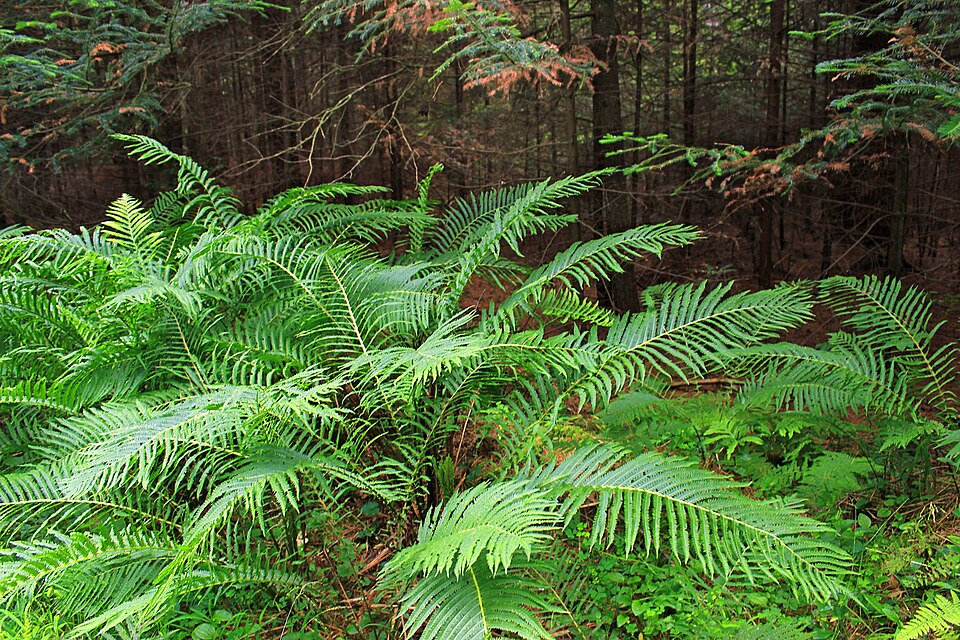
An ostrich fern makes a tidy vase when you look at one crown. A group a few years old can look like a small grove. New crowns appear away from the original plant because the fern spreads underground. That behavior is useful if you have open damp ground you want to fill. It creates a continuing job beside a narrow path or delicate small plants. Choose a place that has room for the colony, then give yourself a clear side from which to watch its edge. The first plant is much easier to place than the whole colony is to move.
Regional sources use several scientific names for ostrich ferns. Penn State Extension refers to Pennsylvania plants as Matteuccia struthiopteris, and some taxonomic treatments distinguish the North American entity as Onoclea pensylvanica. The common name is useful here because the outline and management of the ornamental planting matter more than sorting the names on old nursery lists. Buy well identified propagated stock suited to your region, and follow local guidance near wild vegetation. The plants in this guide are grown for their fronds.
Choose the place for a colony before choosing a crown
Look for a broad, cool area with reliably moist soil and shade for at least part of the day. A woodland edge or the side of a seasonally damp hollow can be suitable if conditions stay useful in summer. Visit after a dry spell as well as after heavy rain. An area that looks very wet in spring can dry quickly beneath large trees once the canopy fills. A place that remains deeply flooded or airless requires plants suited to those specific conditions. Inspect the depth and seasonal behavior of water before deciding the site will work.
Mark the largest area you would be comfortable turning into fern foliage. Keep the edge away from a drain opening, steps, a service cover or the route you use to get a wheelbarrow around the garden. A typical healthy adult clump can carry tall sterile fronds, often several feet high, but the useful estimate here is the total width occupied by many separate crowns. The place to stand while weeding should remain usable even when the outer fronds lean. If the only site is a narrow mixed border, a less traveling fern may fit more readily.
Reserve a maintained side. It might be a gravel path approached from above, the outside of a broad bed or an open strip between the colony and other plants. Make sure you can reach emerging crowns without needing to walk through the patch. A thin edging line may help you see where shoots have crossed. Do not assume it will stop underground spread. You may decide that the native or locally appropriate form is better left to a different part of the property if you cannot maintain that boundary.
Let the first plant show how the site behaves
Put a starter crown on the inside of your planned boundary rather than right beside it. Leave empty ground for the first new crowns. Set it at its nursery depth in soil that can settle around it, and water thoroughly. Keep the growing point clear of a heavy accumulation of leaves. Work around major tree roots instead of cutting into them to achieve the exact outline on a sketch. A small move on the first day can keep the planting out of an important root zone for years.
Check how the root area behaves through its first warm period. Water as needed during establishment, wetting the soil around the crown without maintaining a standing pool. Record an observation at the end of a dry week. Compare moisture close to the plant with the position where the colony might spread next. A large damp area can have a sharp boundary where higher ground dries quickly. You may not need as much space in that direction as you expected, while the naturally moister side calls for more clearance.
Use a durable fixed point, such as a particular stone or corner of a path, to record distances to the planted crown and the intended edge. Check the full height once the fronds open. If a neighbor disappears behind the canopy, consider whether it grows well enough there and whether you want to see it. Leave slower small plants clear of the area where the colony is most likely to move. The time to move those neighbors is generally before they are surrounded by runners.
Watch for separate crowns in spring
When new fronds emerge, distinguish the original vase-shaped group from a separate young crown nearby. Where they are still compact, you can see exactly where each group comes through the soil. Map the outliers before the leaves expand and overlap. A new crown within the planned bed may be just what you want. One that has entered the access strip will be easier to deal with while you can reach its base and see what lies around it.
If an outlier is unwanted, loosen the surrounding soil carefully and inspect the runner leading back into the patch. Lift the young crown and as much of the relevant runner as can reasonably be removed without damaging adjacent roots. If you are moving it to a suitable space, keep the rooted piece moist and replant it at the appropriate level while conditions favor establishment. Keep it out of places where it could escape into sensitive habitat. Follow local guidance on handling viable pieces and avoid taking plants from wild populations.
Go back to the cleared edge later. Another shoot can come from growth you missed, especially if the ground was hard to work or the colony had already mixed with roots from other plants. A modest repeated inspection is easier than one large disturbance close to many established roots. If the plants have outgrown every workable boundary, reconsider the size and place of the bed. A maintained wide patch can be easier to manage than several narrow strips of the same plant.
Leave the inner fronds if you like their winter shape
Watch the long green fronds over a season. They make the full leafy vase and die back as the growing season ends. A mature crown can produce shorter fertile fronds in the center. These become dark and can remain upright beyond the season of the larger leaves. The difference in shape and position helps you recognize the plant when the conspicuous greenery is gone. It also makes a useful marker for a crown that otherwise might be overlooked during cold weather work.
Keep some of the inner fronds where they remain attractive and clear of paths. If you want a cleaner edge, remove broken and collapsed material first. Work where you can see the base and keep equipment away from the emerging shoots when spring returns. A colony looks different under snow, after a storm or toward the end of a mild winter. A few persistent vertical parts can show its shape long enough for you to decide whether the winter view is useful as well as the summer one.
Avoid treating the first spring shoots as food based on appearance. Many ferns produce coiled new fronds, and appearance alone is insufficient for reliable identification. Keep the work here to placing and tending ornamental plants. Label the growing patch and keep new planting stock separate from any edible area. You will then be able to focus on the useful details at the crown, such as which groups are vigorous and where the next few fronds are likely to spread.
A path through two larger patches can become narrower from both sides at once. If you want to keep a clear route, record the farthest frond tips at their full width and the nearest separate crowns before they disappear for winter. Maintaining the crowns a comfortable distance back will usually keep more of the walk usable than removing individual fronds whenever they cross it.
Extend the damp edge at the pace you can maintain
Check the plan from the place where you approach with tools. Are the outer crowns easy to inspect? Can the colony expand another season toward open ground while you keep the narrow side clear? A fern patch that answered those questions in the first year can behave differently after several wet summers. Maintain enough space to carry a fork, and keep one place where you can stand and see the actual base of the planting.
If the trial stays healthy and needs little extra care, allow it to grow toward the part of the bed where the soil remained moist and there is room for more tall fronds. Where it approaches a path, lift early growth when feasible and revisit the edge the following season. Keep the brown fertile fronds where they help you remember what is under the old leaves. The colony is easiest to enjoy when its spread serves an open part of the garden and you can still reach the line you chose.
Further reading: Penn State Extension profile of ostrich fern.